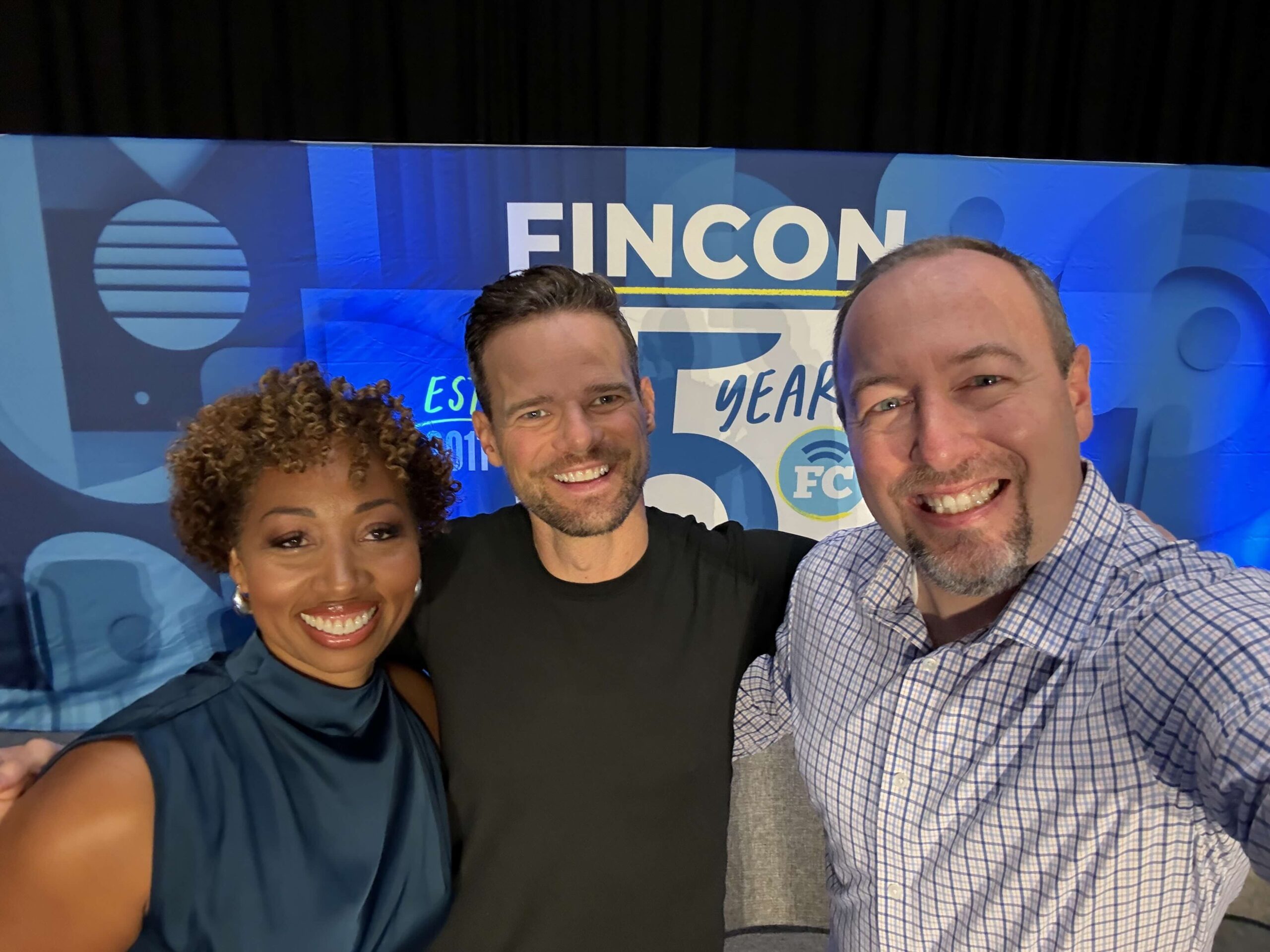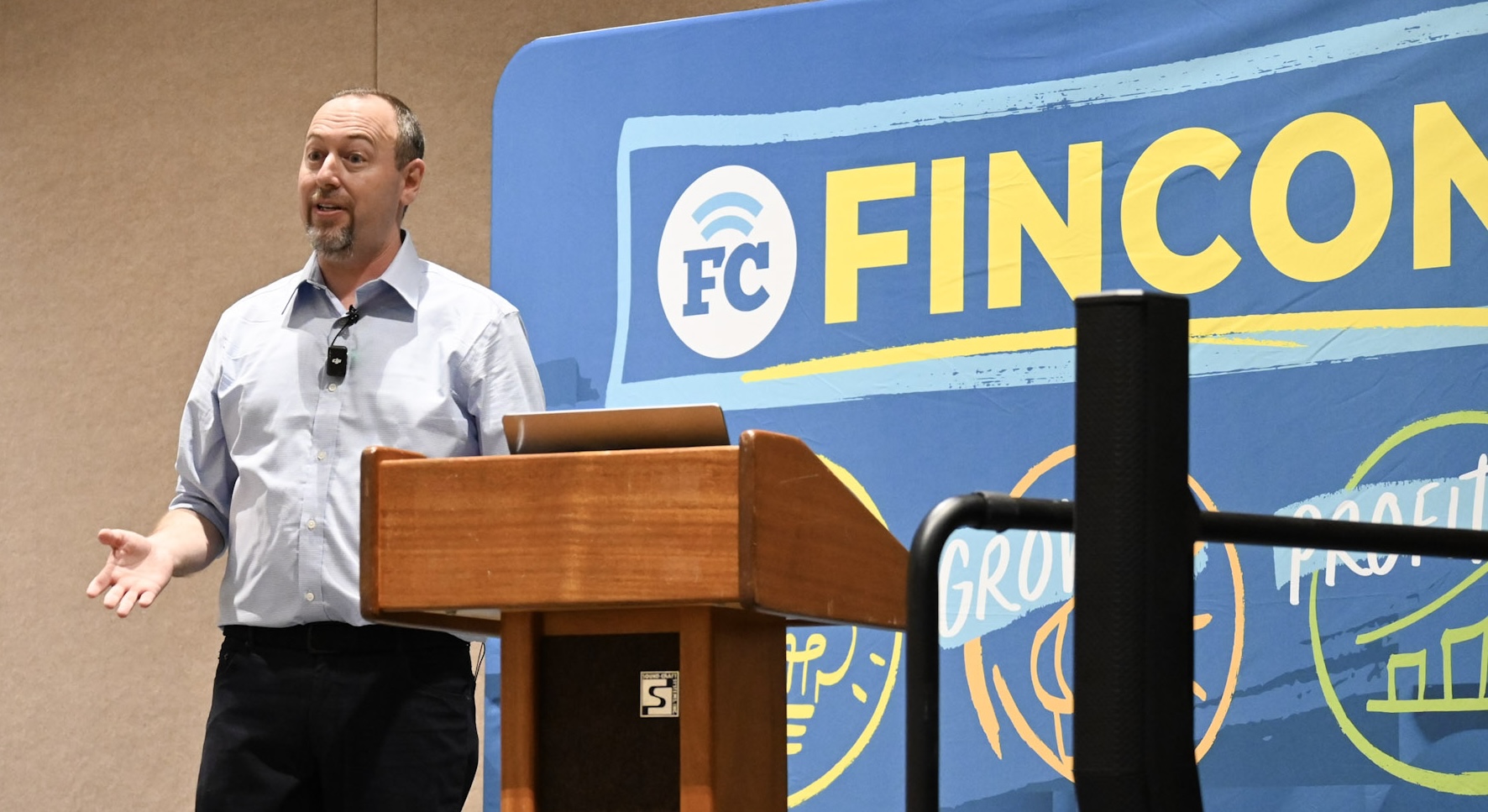
I spoke at FinCon 2026 last week on what's working right now in personal finance media. The room was full, the questions were great, and the most common one afterward was "can I get the slides?"
Yes. The full deck is free, with no email required.
The talk had no story. It was just a list of 10 things that are working today at The College Investor, and every one of them is something you can start tonight. Below is the written version for anyone who wasn't in the room, along with the data behind each point.
The Sad Truth About Google Traffic
Search referral traffic to publishers fell 38% in the U.S. between December 2024 and December 2025, according to Chartbeat data published in the Reuters Institute's Trends and Predictions 2026 report, which covered 797 sites. The size breakdown, reported by Axios from the same Chartbeat data, is worse for the people who attend FinCon.
Small sites with 1,000 to 10,000 daily visitors lost 60%, medium sites lost 47%, and large sites lost 22%.
Money content took the hardest hit from AI. BrightEdge data shows 91% of "what is" finance queries now trigger an AI Overview, up from 70% in 2024. Tax questions went from 0% to 55% over the same stretch.
One number in that research is good news. A Search Engine Land analysis of money-related queries found only 11.3% of finance AI citations come from pages ranking in the top 10, and 65.7% come from pages outside the top 100. Ranking first stopped buying you the answer, which means a small site can get cited without outranking NerdWallet.
All of that led to the three-part thesis behind the talk. Google became a feed. Feeds have lifespans, so evergreen content is dead. And social media is where people moved, where named entities win.
Part 1: Search Is Dead, Long Live Search
Strategy 1: Evergreen Is Dead
We used to publish three to five articles a week. Today we publish 10 to 14 articles, more than seven videos, and more than 70 social posts every week. In August 2026, The College Investor published 771 pieces of content.
I didn't quadruple output by working four times harder. The unit of content got smaller, and each unit gets reused.
Then | Now |
|---|---|
3,000-word skyscraper post | 600 to 800 words |
One epic evergreen resource | 17 small pages |
The definitive resource | 90 seconds of you talking |
One daily social post | Many small social posts |
This works because refresh cadence is the single largest variable in citation share. Google now runs Discover-specific core updates, and the February 2026 update explicitly favored timely content. Search also ingests social content as organic results, so link your social profiles inside Search Console.
Strategy 2: Repurpose Everything
One piece of content should become six to 10 assets.
An example content chain starts with a live Q&A on TikTok. The full recording goes to YouTube, clips go to Shorts and TikTok, the answers become an article on our site full of links, screenshots go to Stories, and the article goes out to syndication. Anything that performs above average gets reposted later.
Post the same video everywhere, on purpose. Google embeds video in the search results, and the slots I see most are positions 3 and 6. It currently does not de-duplicate across video platforms, and it indexes social posts like normal web pages.
One video on YouTube, TikTok, Instagram Reels, Facebook, X, and LinkedIn equals six content items and up to three slots on page one for an afternoon of work.
Each platform does a different job, though. Metricool's 2026 study of 1 million accounts and 39.7 million posts found Instagram delivers 2.25 times more engagement for accounts under 50,000 followers, TikTok has the highest average reach of any platform, and YouTube Shorts views per video rose 30%. Post to all three for the search real estate, and expect native reach from two of them.
If you don't know what to make, the slide deck lists 19 video formats on slide 16, from green screen and man on the street to whiteboard and ask me anything. Pick one you've never tried.
Strategy 3: Own Your Google Surfaces
Google News and Discover are massive traffic drivers in 2026 as Google shifts to a feed. Google News moved to automatically generated publication pages, and preferred sources get more coverage in each reader's individualized results. Ask your audience to add you as a preferred source on Google.
Content qualifies automatically on six factors Google names: relevance, prominence, authoritativeness, freshness, location, and language. That leaves you two levers.
The first is logistical: clear dates and bylines, author and publisher information, company details, and contact information on your site. The second is freshness, which loops straight back to Strategy 1.
Claim your Google creator profile too. It's free, takes about 20 minutes, and requires 100,000 combined followers. I have one for the brand, The College Investor's Google profile, and a separate one for me, Robert Farrington's Google profile. The brand profile shows 162,000 total followers across TikTok, YouTube, Instagram, X, and Threads, with our latest articles listed right below.
Headlines matter more than ever! Google's February 2026 Discover update explicitly targeted sensationalism and clickbait, so drop the curiosity gap and name the thing: the person, the program, the product, the dollar amount.
The structure I use is known entity, hard number, stated action or consequence, known entity. Example: "IRS: Tipped Workers Can Deduct Up to $25,000 Under the One Big Beautiful Bill Act."
Part 2: On Social Media, Entities Win
You are an entity and your brand is an entity, and they should be treated separately. Everything you do on social media plays directly back into search.
Strategy 4: Claim Every Handle, Twice
Claim every handle once for the brand and once for you, then add rel=me links on your website so search engines can connect the accounts. Tier 1, which you should claim tonight, is Facebook, Instagram, YouTube, Threads, TikTok, X, Reddit, Pinterest, LinkedIn, Snapchat, Bluesky, and Substack.
Tier 2 is a defensive claim where you don't have to post: Discord, Twitch, WhatsApp Channels, Telegram, Medium, Quora, Mastodon, Patreon, Spotify for Creators, Apple Podcasts, and your Google profile. MySpace's owners announced a comeback effort in July 2026, without Tom, so maybe grab that one as well.
Here is what that looks like in practice. The College Investor is claimed on Facebook, Instagram, TikTok, YouTube, Threads, Reddit, LinkedIn, Mastodon, X, Pinterest, Bluesky, Snapchat, Substack, Spotify, and Apple Podcasts. The handles don't have to match perfectly. What matters is that each one is claimed for the brand.
The whole job takes about 90 minutes, and the payoff is measurable. Ahrefs studied 75,000 brands and found correlations of 0.656 to 0.709 between branded web mentions and visibility in Google AI Overviews, ChatGPT, and AI Mode.
Backlinks matter, but visibility matters more right now.
What gets you cited by AI is your name appearing consistently in a lot of places. If your name is inconsistent across those profiles, you're not one entity with 20 mentions. You're 20 fragments that AI can't add up.
Strategy 5: Reddit
Create r/[yourbrand] first. Ours is r/TheCollegeInvestor. You control it, and nobody can ban you from it. Then build a personal Reddit account with real karma and real history.
Inside everyone else's subreddits, follow the rules, skip the self-promotion, and be helpful. Spamming AI slop, dropping links, and sounding like a brand all get spotted instantly. Redditors will find you on their own if your answers are good.
The numbers justify the effort. Chartbeat data analyzed by Press Gazette shows Reddit referrals to publishers up 220% since 2019, the best growth of any social source. Logged-out daily users now exceed logged-in users, which makes Reddit a search destination as much as a community, and it ranks among the most-cited domains in AI answers.
My own posts received 241,969 views last week. That’s average.
Strategy 6: Facebook
Facebook is still the only social platform sending real clicks at scale, and a lot of those clicks come from groups and from comments on native posts.
The platform punishes links. Meta's Widely Viewed Content Report shows 97.3% of U.S. Facebook post views contain no outbound link, and link posts in the data I presented came in at 0.05% against 0.20% for status posts.
Post natively, then put your link in the comments and in groups, which is how we run The College Investor's Facebook page.
Meta keeps building in this direction. In May 2026 it launched Forum, a Reddit-style app built entirely on Facebook Groups. In June 2026 it wired Group content into Facebook's AI search. Public Group content is now a discovery play that gets indexed in search, and brands will pay for mentions and sponsorships inside it.
We run multiple groups, each built around one topic: a FAFSA and financial aid group, a student loan group, and an investing group.
Strategy 7: Threads And Instagram
Threads still lets links work, and that will not last. Facebook closed this window years ago, so go now. You can see how we use links on our Threads account.
On Instagram, three changes are worth making tonight, and you can see all three on our Instagram feed. Kill your hashtags, because Metricool found posts using them got 31.7% fewer views.
Set up Manychat to send people from comments and DMs back to your site. And invest in better images, because Meta applies a "high-quality creative" label to posts, and that signal feeds the algorithm.
Part 3: Making Money
Strategy 8: Creator Programs
Facebook, Instagram, TikTok, and YouTube all pay creators directly, and all four are paying us. Facebook alone paid creators $3 billion in 2025, up 35% year over year, and the number of creators earning more than $10,000 a year grew 30%.
The specific doors are Facebook's Content Monetization Program for posts and Reels, Instagram bonuses for photos and carousels, the TikTok Creator Rewards Program, X Creator Revenue Sharing, and the YouTube Partner Program. Cross-post the same content to every one of them. You already made the video in Strategy 2, and the same clip on our TikTok and our YouTube channel earns from both programs.
Strategy 9: Sell Sponsorships
AI is destroying search, but brands struggle to earn their own AI mentions, and you can sell that to them. Brands buy two things now. The first is the impression, which they've always bought. The second is ingestion, because your content is grounding data for every AI model.
The 5WPR Credit Cards AI Visibility Index 2026 makes the case. The Points Guy, NerdWallet, and Bankrate account for more than 62% of all credit card citations across ChatGPT, Claude, Perplexity, Gemini, and AI Overviews. Chase.com, Amex.com, and CapitalOne.com combined account for less than 6%.
The issuers cannot win this on their own sites. They have to be inside yours, and that's a long-term value argument you can make on a sales call Monday. Professional publishers already see it: Digiday's 2026 research ranks direct-sold ads first (3.22) and branded content second (2.62) as revenue priorities, while affiliate fell to 1.28 from 2.42 a year ago.
Strategy 10: Own Your Own Website
Your website is still by far the best place to earn money. This is especially important for podcast and video creators that may not have focused on their websites.
Everybody asks whether mobile or desktop converts better, so I pulled our sitewide affiliate numbers for this talk. Conversions aren't happening at scale on a link-in-bio page on a phone.
Category | Mobile | Desktop | Desktop advantage |
|---|---|---|---|
Brokerage / Investing | 1.2% | 11.2% | 9.3x |
Other | 1.4% | 3.3% | 2.4x |
Banking / Savings | 2.3% | 5.1% | 2.2x |
Insurance | 20.0% | 29.2% | 1.5x |
Student Loans | 14.7% | 17.7% | 1.2x |
Gig / Rewards apps | 13.2% | 13.2% | tie |
Source: The College Investor, 2026 year to date.
Desktop has the highest conversion rate in almost every category. Clicks skew mobile, but people take less action on a phone.
Mobile still earns its place. Student loan offers convert at 14.7% on mobile, which beats desktop in four of the six categories. Gig and rewards apps convert at 13.2% on mobile, ahead of desktop brokerage, desktop banking, and desktop "other." The right offer on mobile beats the wrong offer on desktop every time.
The rule underneath the table is consumer friction. Brokerage accounts, bank accounts, and anything requiring a bank login or a Social Security number convert two to nine times better on desktop. For app downloads, rate checks, and quick signups, the device barely matters.
That table also explains our revenue mix. About 80% of our revenue still comes directly from content on our website, through affiliate conversions, display ads, sponsored partnerships, syndication, and AI licensing rights. The other 20%, from social and video, ties directly back to that same content. Unique, helpful content wins.
The Stack
For analytics we use Plausible, Occasio, and LinkClicky. For AI we use Claude and Wispr Flow. For social we use the native apps, all of them, with no scheduler.
The two workflows worth stealing are a daily finance news brief, which feeds the publishing pace in Strategy 1, and a system for creating and repurposing social content from every article.
All 10, And Your Homework
- Evergreen is dead, so publish more and update more
- Repurpose everything into six to 10 places, then repeat
- Own your Google surfaces
- Claim every social handle twice, personal and brand
- Build on Reddit
- Work Facebook through groups and the native feed
- Use Threads while links still work
- Join every creator program
- Sell sponsorships on AI visibility
- Keep your own website at the center
I ended the talk with homework, and it applies here too. Pick three of these and do them tonight.